Big Impact on Little Ones in Jamaica

Updated: Dec 19, 2025

Westmoreland Parish residents left with injury and loss
On the weekend of Oct. 25, 2025, Westmoreland Parish was a glistening tropical oasis. Resorts, both small and large, dotted a coast caressed by turquoise Caribbean waters, offering tranquil days of leisure and relaxation. Homes scattered along the hills overlooked a spectacle of beauty. A few short days later, that all changed.
Melissa was the most powerful storm to make landfall in Jamaica in recorded history. Sustained winds reached 185 mph (297 kph), with gusts exceeding 250 mph (402 kph). Storm surge pushed as much as 13 feet (4 meters) of water into coastal communities. The hurricane pounded the western half of Jamaica with astounding ferocity, leaving devastation and confusion in its wake.
Damage from Hurricane Melissa in Westmoreland Parish, Jamaica
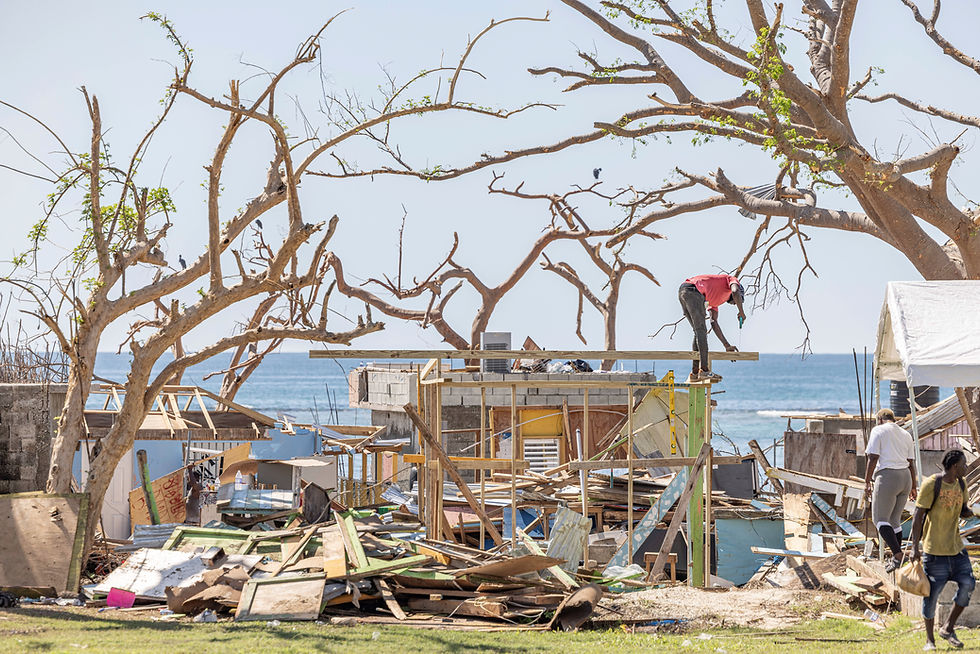
I spent a month in Jamaica in the immediate aftermath of the storm. This photo essay reflects on one of the key observations during that time.
Focus through the chaos
Much of the population in western Jamaica was left unhoused by the storm, with families uprooted, scattered and searching for shelter and safety. Too many lost everything — their homes, their personal belongings and, most heartbreakingly, loved ones.
Among the most vulnerable were children, many too young to understand what had happened or why.

Before the storm, local schools provided multiple services to the community. They were safe spaces for children to learn and play, and places where many received their only hot meal of the day. Schools also allowed parents time to work or repair homes, knowing their children would return to the best possible conditions at day’s end. From the individual child to the family unit and the broader community, schools served as gathering places and emergency shelters. When Hurricane Melissa took them away, the impact was immediate.
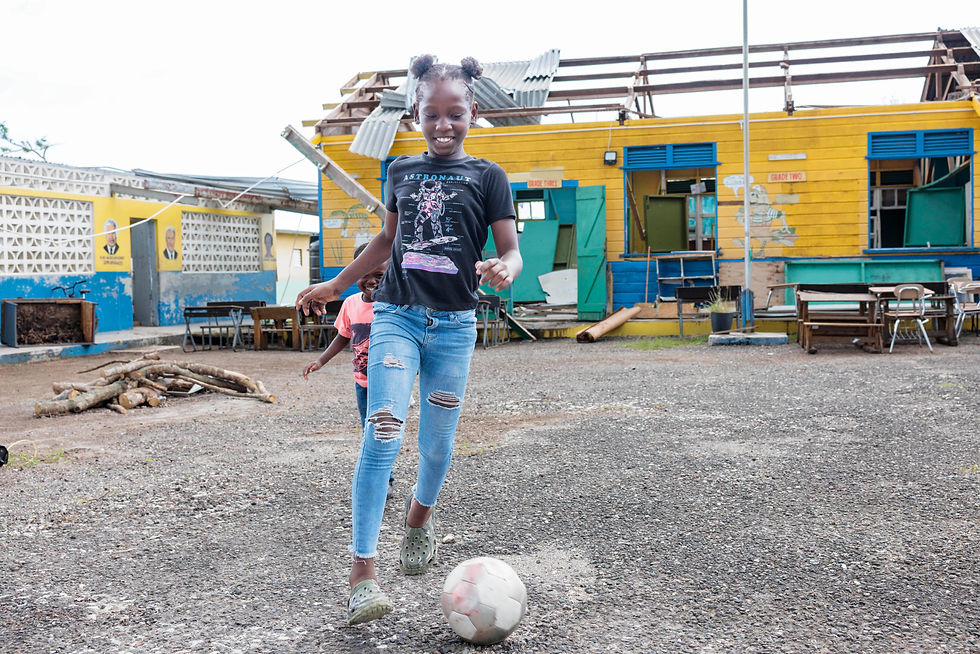
Damaged schools in Westmoreland Parish
In Whitehouse, the disaster response organization Team Rubicon deployed chainsaw operators, roof tarpers and debris removal volunteers. Shortly after arriving, the team connected with the Sandals Foundation and the Ministry of Education and Youth, identifying more than 60 schools in Westmoreland Parish alone that needed assistance.

“Getting children back to normalcy is critical because they need that in their life — to see their friends and have psychosocial support and hot meals,” said Heidi Clarke, Executive Director of the Sandals Foundation.
The goal became to clean, secure and dry as many schools as possible so children could regain a semblance of normalcy and communities could begin to see hope. The work was grueling, and the heat and humidity were stifling. In the first weeks, teams began cleanup and temporary repairs at six schools while developing plans to add more for subsequent waves of volunteers.
Volunteers clean and perform repairs at schools in Westmoreland Parish
Returning children to school was critical to their well-being and mental health. Many lingered near the wreckage, clinging to the idea of normalcy. As work progressed, so did the joy and optimism of youth. They watched life being breathed back into something special they thought was lost. Smiles and play returned in small increments throughout each day.


A class room before and after debris removal
Another dimension, more challenges
With limited safe space for children, injuries began to rise. The first days and weeks were filled with danger, some obvious, others hidden. Power poles lay across streets, and cables littered roadways. Debris consisted largely of building materials — nails, torn metal and broken glass — all especially hazardous in a culture of sandals and Crocs.
Damage from Hurricane Melissa
A medical team I embedded with, also from Team Rubicon, began treating patients knowing their work was only a temporary solution. Long-term plans to restore local medical capacity remained unclear as the full scope of the disaster emerged. The team’s first clinic was established at Savanna La Mar Public General Hospital on the southwest coast.

The hospital itself had been damaged in the storm. Volunteer emergency doctors, nurses and paramedics spent two days clearing outdoor space for a temporary clinic that would supplement the emergency department before seeing a single patient.
Left: Members of the medical team clear debris from the site that will host the temporary clinic supporting the Savanna La Mar Public General Hospital, Right: Medical team members survey damage and search for equipment to use in the temporary clinic
They treated lacerations, wounds and stress-related conditions. Parents brought children for many reasons — sometimes simply because it was the only place that felt safe amid the chaos. Some children arrived wide-eyed and afraid; others were carefree, as if nothing had changed.
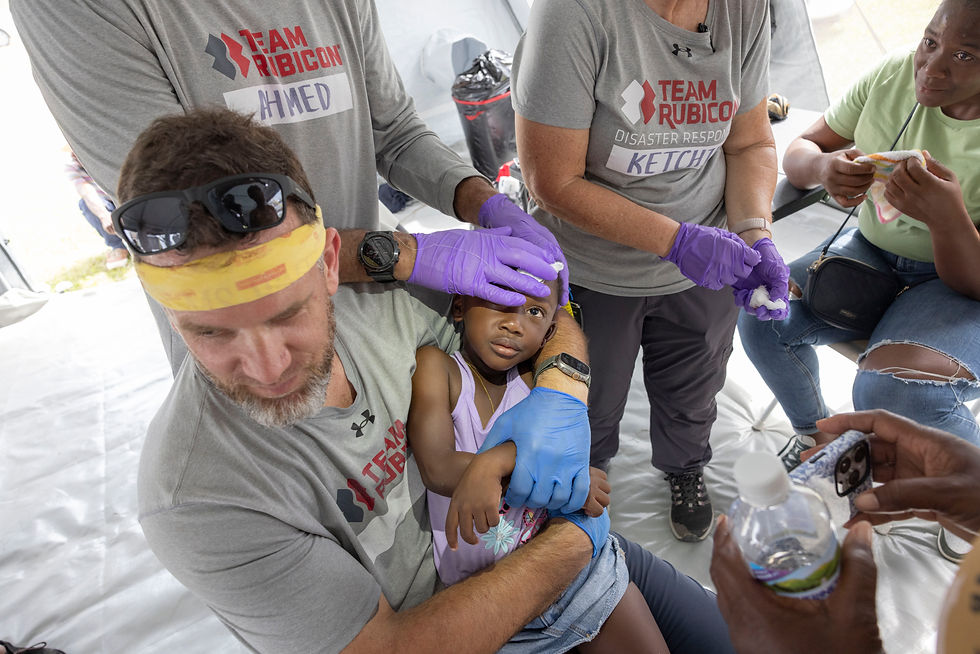
The medical team from Team Rubicon tends to patients
Each day, pregnant women sought guidance, unsure of what to do with medical resources stretched dangerously thin. A disaster zone is never an easy place to bring a child into the world, and this one was particularly severe.

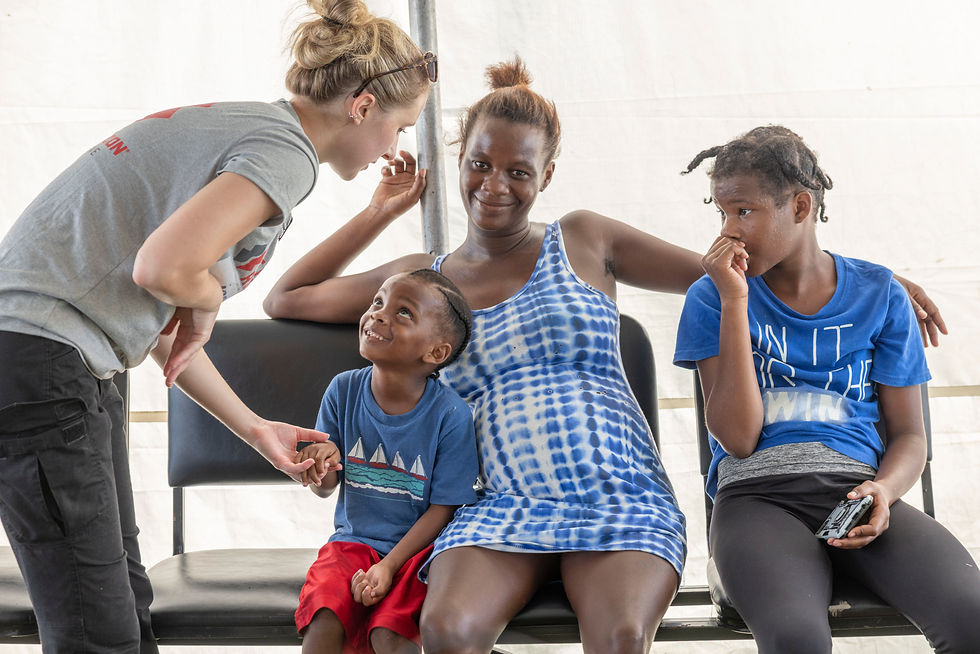
There were tears, giggles and fist bumps as patients moved through the process. Glimmers of hope and gratitude appeared on the faces of frightened parents. It was a small thing, but small things grow and spread.
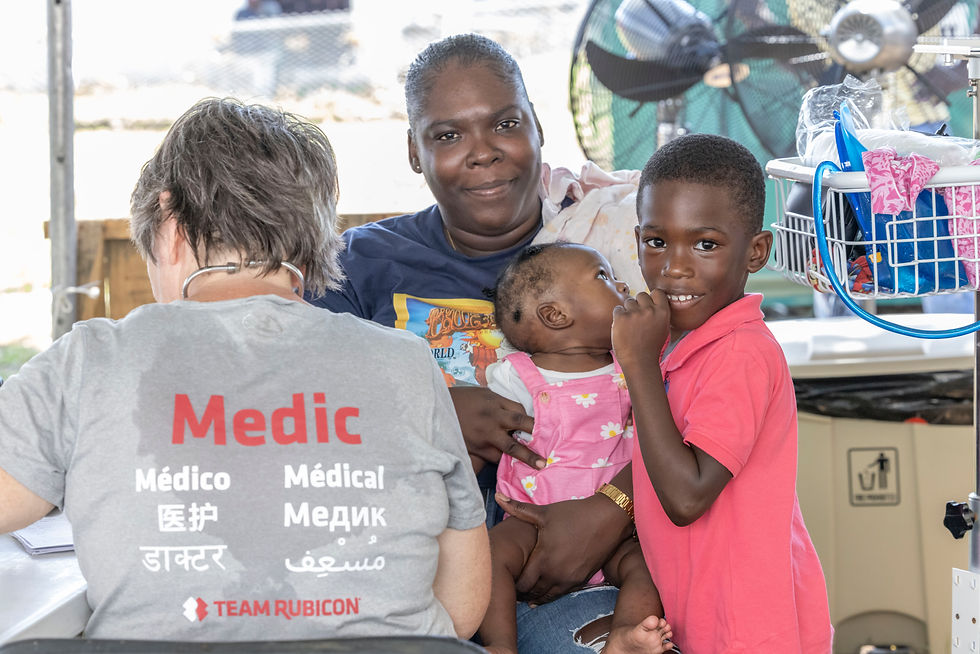
A long road ahead
By the time I left on Nov. 29, the two teams had collectively treated more than 1,500 patients and supported more than 1,100 students and their families through school repairs. Fresh volunteers were rotating in to continue the work. Jamaican authorities were reopening roads and gradually restoring electricity, though some areas may remain without power for several months. Supplies such as lumber and tarpaulins were still being assessed, and shortages persist and compound the challenges of shelter, food and clean water.
Left: Community members gather under rare shade from tarpaulins, Right: Community members wait in line for a hot meal from World Central Kitchen

Though the storm is nearly two months past, recovery will continue for months, if not years. Children, adaptable as they may be, will need sustained support from local and global communities to reduce the long-term effects of trauma.
There is still much left to be told, and time will author that narrative. Jamaicans want to be seen and heard. They want to tell their stories and know that they matter. Much of my time was spent listening, playing or offering a hug. And when you see the smile on a child’s face as they realize they are truly seen — and that their school has been returned to them — it is difficult to remain the same person you were when you first arrived.

All photos by Jamie Brown

Comments